The sound behind the steps
Instruments of Anatolian dance
The davul, zurna, bağlama and kemençe: what each instrument is, which dances it drives and what to listen for in a folk-dance show.
Reserve a seat in Sirkeci ↗Quick answer
Many Anatolian folk dances are driven by a davul drum and a zurna reed pipe. The bağlama, a long-necked lute, is the principal folk lute of Turkish folk music, and the kemençe is a bowed instrument associated with the Black Sea.
Dance and music belong together
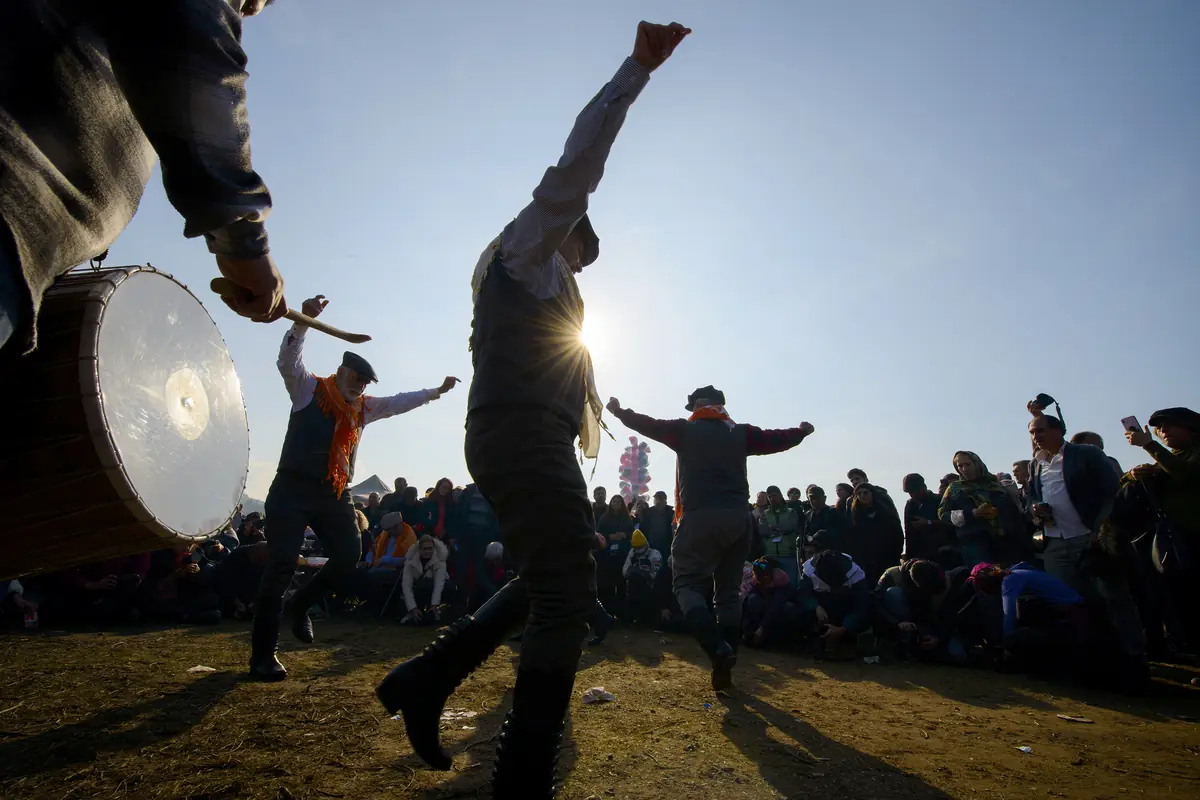
In Turkish folk culture the dance and its music are one thing. Wikipedia says halay is traditionally accompanied by the zurna and davul, or the dancers sing, and that electronic instruments have increasingly replaced the traditional ones in recent years. Bar is accompanied by the same pair, and horon by a wider set. Rhythm of the Dance promises live music but does not name the instruments, so this guide describes the ones the sources link to Anatolian dance. Think of it as a short listening primer: a handful of sounds, each tied to a dance you may see. Wikipedia's articles on each instrument, listed below, say more than a short guide can.
The davul
The davul is a large, double-headed drum played with mallets. Wikipedia says one head produces a deep bass tone and the other a sharp treble, so one drum covers both ranges. A thick mallet strikes the low head with the dominant hand and a thin switch taps the high head with the other hand. The shell is usually walnut or chestnut, with goatskin heads and a zigzag rope that holds and tunes them. In Turkey, the davul is most commonly played with the zurna.
The zurna
The zurna is a double-reed wind instrument, and Wikipedia calls its sound loud and piercing, which suits outdoor events such as weddings and celebrations. It needs high air pressure, so players often use circular breathing to play without stopping. Because its volume is constant, it does not emphasise rhythm, and the drum usually supplies the beat. If you hear a loud, piercing pipe over a drum, you are hearing the pairing Wikipedia names for Turkish folk music.
The bağlama
The bağlama, also called the saz, is a long-necked, fretted lute that Wikipedia describes as the principal folk lute of Turkish folk music. Its strings are usually arranged in three courses, and many regional tunings exist. It is closely tied to the âşıks, the itinerant poet-musicians of Anatolia. Wikipedia says zeybek is usually accompanied by the davul and zurna, or by the bağlama in some regions.
The kemençe
Kemençe is a name for several bowed string instruments of the Eastern Mediterranean and the Black Sea region. Wikipedia describes the Black Sea kemençe, also called the Pontic kemenche, as a box-shaped instrument held upright with its tail resting on the player's knee, usually with three strings. Wikipedia's article on the horon lists the kemençe among its instruments, together with the clarinet, the tulum bagpipe and the davul and zurna.
Meter: why the beat limps
Turkish folk music often uses meters with uneven groups of beats. Wikipedia says the aksak 9/8 pattern is especially characteristic of Turkish folk music. Zeybek in its fast style is set in 9/8, karşılama is usually in 9/8, and bar commonly in 5/8 or 9/8. To hear it, count nine beats as two, two, two and three. The longer final group gives the dance its lopsided lilt, and it is the easiest thing to listen for during a show.
Listening in the hall
None of this is required knowledge for enjoying the show. Pieces can differ between dates, so use these notes as a listening aid, not a list of what to expect. If the evening includes a drum with a high, bright pipe, you now know the davul and zurna. If a bowed, upright instrument takes the lead, it may be a kemençe. The programme booklet that comes with the ticket is the place to check.
Read next: Anatolian folk dances, explained
Frequently asked questions
What is the davul?
A large, double-headed drum played with a mallet and a switch. In Turkey it is most commonly played with the zurna.
What is the bağlama?
A long-necked, fretted lute, also called the saz, described as the principal folk lute of Turkish folk music.
Sources